
Looking For a Better RingCentral Alternative?
Global Voice Direct combines business phone service, AI voice assistants, AI receptionists, CRM automation, business texting, and startup growth tools into one platform designed for modern businesses.
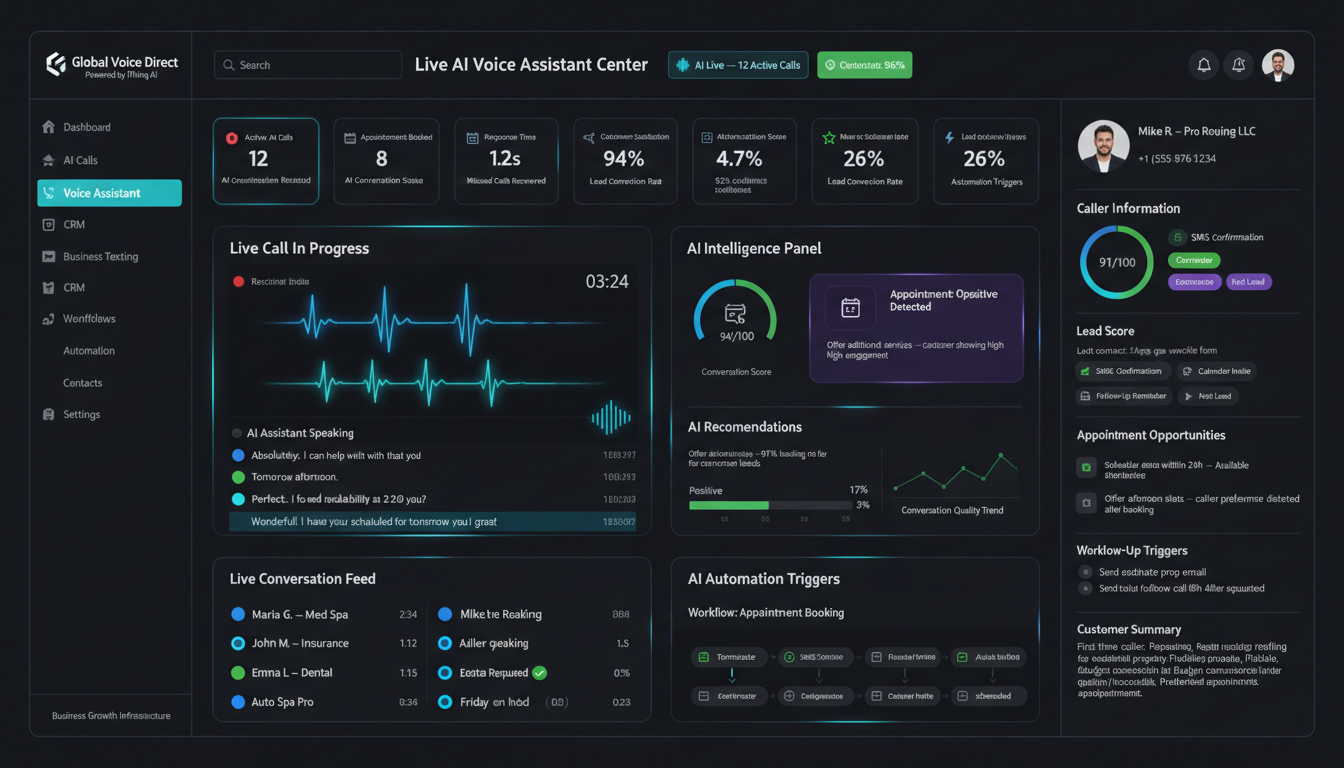
Executive Summary: Navigating Business Communications in 2026
The landscape of enterprise and small business communication has shifted drastically heading into 2026. Traditional Voice over Internet Protocol (VoIP) structures—which historically focused purely on routing audio and static text messages from point A to point B—are no longer sufficient to sustain agile commercial operations. Modern businesses are actively auditing their setups to transition from classic telecom utilities to complete growth environments.
For over a decade, legacy platforms like RingCentral served as standard models for corporate cloud migrations. However, contemporary market forces demand unified platforms that integrate conversational generative intelligence, automated customer relationship management (CRM) logging, and scalable financial framework access. This analysis provides an exhaustive evaluation of Global Voice Direct as the definitive RingCentral alternative, outlining structural performance benchmarks, operational methodology transformations, and programmatic infrastructure capabilities engineered for small-to-medium businesses (SMBs), startups, and specialized service verticals.
Why Businesses Are Switching From RingCentral
Market migrations away from traditional telecommunication architectures toward unified systems are driven by concrete operational requirements. Organizations looking for an alternative to RingCentral consistently point to several key core limitations within legacy frameworks:
1. Compound Cost Realization and Scalability Friction
Legacy platforms often use tiered pricing models where critical utilities—such as deep call analytics, automated call recording retention, and comprehensive text packages—require shifting to higher service tiers or paying for individual license add-ons. As a business grows, these incremental user fees can result in high monthly bills, making it harder for small businesses to scale cost-effectively.
2. Configuration Complexity and Administrative Burden
Traditional corporate phone suites are engineered to satisfy highly custom enterprise topologies. Consequently, their administrative control centers are often dense, multi-layered interfaces that demand dedicated IT support or certified consultants to execute basic changes. For small business owners or agile startup teams, deploying a new interactive voice response (IVR) tree or re-routing after-hours queues shouldn’t require an internal IT ticket.
3. The Fragmented Add-On Dilemma
To assemble a modern tech stack around a legacy phone service, businesses frequently must purchase external service layers: separate software for conversational AI, detached text tools for outbound SMS marketing, and third-party middle-tier services to sync call metadata into platforms like HubSpot or Salesforce. This fragmented approach can lead to data siloes, broken synchronization pipelines, and multiple overlapping software bills.
4. Enterprise Scope Versus Startup Realities
Legacy software architectures are inherently optimized around seat volume and large enterprise retention metrics. Because of this focus, their product roadmaps rarely prioritize features explicitly built for fast-moving startups—such as rapid vendor accounting credit pathways, direct integration with alternative corporate funding systems, or lightweight out-of-the-box automation templates tailored for smaller teams.
5. The Limits of a Traditional Telecom Approach
At its core, standard cloud voice systems still operate on the traditional public switched telephone network (PSTN) mindset: assigning a digital address line, providing an audio channel, and charging for the connection. However, today’s companies don’t just need a digital line to pick up calls manually; they need automated endpoints that can automatically answer, converse, document, qualify, and convert interactions into revenue without human delay.
What Businesses Want Today: The 2026 Core Paradigm
When searching for a business phone system alternative, corporate buyers are changing what they look for in a communications tech stack. Basic features like dial tones and call forwarding are now seen as standard utilities. True value has shifted toward a few main capabilities:
- AI Receptionists: Front-line software agents capable of answering incoming public lines simultaneously, processing native natural language requests, and delivering immediate resolutions without placing prospects into hold queues.
- AI Voice Assistants: Sophisticated, context-aware digital agents that can engage in long-form, multi-turn phone conversations, resolve customer service requests, and accurately route caller intent based on context.
- Direct CRM Workflows: Eliminating manual data entry by using software that writes call transcripts, saves customer data fields, tracks sentiment scores, and logs transaction updates directly into customer relationship records in real time.
- Unified Business Texting & Automation: Moving past basic 1:1 messaging to adopt integrated SMS logic workflows, conversational reminders, text-based blast updates, and event-triggered text follow-ups.
- Missed Call Text Back: Automatically sending a helpful text message to a mobile caller the moment an inbound call goes unanswered, saving the lead before they move on to a competitor.
- Automated Appointment Scheduling: Giving AI agents the ability to look up internal calendars, check team availability, reserve time slots, and modify appointments on the fly right over the phone call.
- Outbound AI Calling: Deploying proactive digital voice agents to handle tasks like following up on web form submissions, confirming shipments, or nurturing cold pipeline accounts safely and efficiently.
RingCentral Alternative Comparison Table
An objective feature-by-feature matrix comparing a traditional enterprise cloud phone system architecture with Global Voice Direct’s integrated business operating infrastructure.
| Feature Matrix Feature | Traditional Cloud VoIP (e.g., RingCentral) | Global Voice Direct Platform |
|---|---|---|
| Phone Service | Standard Cloud Core Included | Standard Cloud Core Included |
| AI Receptionist | Basic Auto-Attendant / Touch-Tone IVR Only | Native Conversational Gen-AI Included |
| AI Voice Assistant | Requires External Third-Party Integration Add-On | Native LLM Voice Processing Engine Integrated |
| Business Texting | Included (Subject to strict tier volume allocations) | Fully Integrated / Scale-Optimized SMS Toolset |
| CRM Capability | External Connectors (Requires specific software tiers) | Native Lead Tracker & Comprehensive Custom API Hub |
| Call Recording | Standard Audio File Generation (Storage caps apply) | Audio Logs with Automated Real-Time Text Transcription |
| Call Routing | Traditional Rigid Call Group Configurations | Dynamic Smart Routing Driven by Caller Intent |
| Mobile App | Dedicated iOS and Android Clients Available | Dedicated High-Performance Mobile Applications |
| Use Existing Number | Supported Through Standard Porting Schedules | Supported (Both standard porting and call forwarding) |
| Use Existing Cell Phone Number | Requires Complete Core Line Porting Process | Simultaneous Dual-Routing Without Porting Needed |
| International Numbers | Supported (Requires explicit international plan steps) | Global Geographic Inbound Routing Capabilities |
| AI Outbound Calling | Limited / Complex Third-Party Custom Code Builds | Native System Outbound Automated Agents Available |
| Lead Qualification | Manual Input by Human Team Members Required | Automated Real-Time Extraction During Active Calls |
| Appointment Scheduling | Requires Manual Scheduling App Connections | Direct Dynamic Calendar Database Integration |
| Missed Call Text Back | Requires Custom Middle-Tier Software Builds | Immediate Out-of-the-Box Core Automation Feature |
| Workflow Automation | Dependent on External Logic Platforms (e.g., Zapier) | Built-In Event-Driven Execution Architecture |
| Funding Partner Access | No (Not structured within typical telecom operations) | Direct Connections to Funding Networks Included |
| Vendor Account Opportunities | No (Standard retail subscription billing model) | Corporate Credit Reporting Verification Paths Built In |
| Startup Friendly | Optimized for Larger Enterprise Volume Commitments | Explicitly Built for Agile Entrepreneurial Teams |
| 24/7 Support | Varies Based on Account Tier Selection Level | Full 24/7 Multi-Channel Direct Technical Support |
Why Global Voice Direct Is Different: The Operating System for Modern Business Communication
Most traditional telecommunications providers approach their product design from a simple baseline: they sell calling channels, user texting accounts, and simple extension trees. This model functions purely as a transmission utility.
Global Voice Direct is engineered differently. It serves as an integrated AI business phone system that functions as a comprehensive operating framework for corporate growth. Instead of treating communication channels as separate features, Global Voice Direct unites four vital pillars into a single dashboard:
1. Cloud Communication
Reliable, global high-definition voice infrastructure, adaptive mobile routing applications, and robust business messaging protocols.
2. Automation Logic
Immediate missed call text back loops, triggered workflow automation systems, and touch-free scheduler management platforms.
3. Native AI Core
Conversational front-end receptionists and powerful voice engines running on top of today’s leading large language models (LLMs).
4. Growth Infrastructure
Integrated commercial credit reporting verification links and direct access channels to alternative startup funding networks.
By connecting these foundational layers, a business owner can replace multiple disconnected subscriptions with one clear communication system. Your phone service shifts from a traditional operational expense into an automated driver of revenue growth.
Keep Your Existing Number: Business Phone System Without Porting
One of the largest roadblocks preventing an organization from adopting a modern cloud phone system is the anxiety associated with numbers and carrier migration. Standard industry porting guidelines set by the Federal Communications Commission (FCC) can take days or even weeks to fully execute. During this transition, a business risks missed calls, dropped text threads, or temporary service interruptions that stall active marketing pipelines.
Global Voice Direct, powered by the technical infrastructure of IThinq AI, solves this problem by offering a true business phone system without porting dependencies. This configuration completely changes how phone lines can be deployed:
- Keep Current Business Numbers: Seamlessly integrate your existing primary public landline numbers without experiencing any system downtime or losing configuration histories.
- Keep Current VoIP Number Footprints: Safely connect digital identifiers currently hosted across legacy alternative providers without running into cross-network service drops.
- Use Existing Personal Cell Phone Numbers: Run professional, interactive business voice services directly through an existing personal cell line while keeping your personal number entirely private.
- Deploy Global International Numbers: Instantly create local geographic presence numbers in regions worldwide to easily support overseas customers and partners.
- Receive Clean New Number Blocks: Instantly provision fresh, verified local or toll-free numbers across target area codes right from your admin dashboard.
Why This Matters Operational Stability: By separating your user interface layers from legacy carrier dependencies, you can route calls through sophisticated AI engines within minutes. You don’t have to wait for slow manual porting steps or risk losing business during a transition.
AI Voice Assistant Comparison: Traditional Systems vs. Next-Gen Intelligent Routing
To understand why companies look for an alternative to RingCentral, it helps to examine how inbound customer phone calls are processed under traditional architectures compared to modern AI ecosystems.
Traditional Phone Networks
Traditional systems operate on rigid, static path logic rules. A customer rings a business line and encounters a standard pre-recorded voice instruction script (“Press 1 for Sales, Press 2 for Support”).
If a caller is driving, multi-tasking, or has a complex request that doesn’t fit a standard category, this rigid menu forces them into long hold queues or straight to a generic voicemail box.
Data collection remains entirely manual: human agents must listen to records, manually type summaries into a CRM, and schedule follow-ups by hand, creating opportunities for human error.
AI-Powered Communication Platforms
Next-generation systems use natural language processing models, similar to advanced engines developed by OpenAI, directly inside the voice channel. When a call arrives, an intelligent AI receptionist answers immediately, understanding conversational context naturally.
Instead of navigating rigid button menus, the caller talks naturally. The AI agent listens, qualifies the lead, checks real-time calendars to schedule appointments, and coordinates technical support steps without human intervention.
Every interaction is automatically transcribed, structured into clean data, and instantly saved directly to your CRM records, ensuring your business never drops a critical lead.
Built for Growing Businesses: Specialized Vertical Engineering
Enterprise telecommunication products are typically designed to maximize seat-license metrics for large organizations with thousands of desk phones. Global Voice Direct focuses instead on supporting agile, high-growth industries that require fast response times, intelligent automated follow-ups, and flexible infrastructure:
Startups and Entrepreneurs
Early-stage businesses need to project an established, highly professional image from day one while keeping manual workloads low. Integrated tools like missed call text back systems and automated AI qualification funnels prevent valuable leads from being lost, even when founders are heads-down building product.
Independent Contractors & Local Trades
For professionals managing active projects on-site—like roofing teams, HVAC technicians, or electrical specialists—answering every incoming call manually is nearly impossible. Global Voice Direct’s AI receptionist for small business captures every lead, answers common service questions, handles standard booking flows, and sends immediate text confirmations while your team is out in the field.
Insurance Agencies & Financial Practices
Financial service offices require clean documentation pipelines and reliable messaging systems to maintain regulatory compliance. Global Voice Direct automatically creates written transcripts of all client interactions, updates primary lead statuses, and coordinates automated reminders for policy renewals over text, helping teams manage large books of business efficiently.
Med Spas & Wellness Practices
Wellness clinics often face administrative friction around appointment scheduling and intake workflows. An AI voice assistant can look up real-time calendar availability over the phone, book appointment slots, handle late cancellations, and update patient files instantly, reducing front-desk overhead and minimizing empty booking times.
Real Estate Firms & Brokerage Teams
In real estate, response time can make or break a deal. If an agent is touring a property, incoming buyer calls can be handled immediately by a conversational assistant. The platform qualifies the buyer’s interest, captures their contact info, and syncs those details straight to the agent’s mobile app so they can follow up fast.
Business Communication Beyond VoIP: The Multi-Tiered Feature Ecosystem
To truly understand how Global Voice Direct serves as a modern business communication platform, it helps to examine its key feature layers in detail:
1. Unified AI Receptionist
This front-line system answers multiple incoming calls simultaneously, completely eliminating busy signals and long hold times. It handles common inquiries, qualifies intent, and ensures every single customer receives immediate, professional support from the first ring.
2. Context-Aware AI Voice Engine
This system uses natural language processing to engage in smooth, conversational phone calls. It goes beyond rigid menus to understand complex user requests, providing natural, helpful assistance for account lookups, technical questions, and product inquiries.
3. Built-In Lead Management & Tracking
The platform includes a built-in lead tracking system that updates client details automatically during active calls. It logs caller history, matches contact info, and tracks pipeline stages in real time without requiring manual data entry from your team.
4. Integrated Automated Texting (SMS) Tools
This toolset connects your phone service directly to your messaging channels. It lets teams run text-based marketing campaigns, schedule automated appointment reminders, and deploy instant text replies to missed calls from a single system.
5. Deep Conversation Analytics
The platform automatically converts call audio into structured text data. It analyzes conversations for customer sentiment, flags important topics, highlights follow-up items, and gives managers clear, data-driven insights into customer interactions.
6. Flexible Automated Calendars
The system connects directly to standard business calendar databases. This allows automated AI assistants to check real-time availability, book open slots, update existing appointments, and handle cancellations smoothly over the phone.
Deployment Choice Matrix: Determining Your Organizational Fit
Choosing a communications platform requires an objective look at your organization’s technical needs, internal resources, and long-term growth plans. Here is a balanced look at which platform fits different business profiles:
Who Should Stay With RingCentral?
RingCentral remains an incredibly robust, reliable, and highly stable option for several corporate use cases:
- Enterprise Organizations: Companies requiring tens of thousands of dedicated physical desktop phone endpoints across multiple international office campuses.
- Large Internal IT Teams: Organizations with dedicated IT departments that prefer to build custom configurations through advanced, granular telecommunication control portals.
- Complex On-Premise Setups: Large companies that need to maintain complex legacy hardware setups and deeply customized enterprise integrations across internal servers.
Who Should Switch to Global Voice Direct?
Global Voice Direct is optimized specifically for companies focused on speed, efficiency, and automated growth:
- Startups & Growing Businesses: Teams looking to leverage conversational AI, automate administrative tasks, and save hours of manual data entry every single week.
- Agile Small-to-Medium Teams: Companies that want a clean, user-friendly dashboard that makes it simple to manage phone lines, text campaigns, and customer workflows without needing dedicated IT staff.
- Service-Driven Professionals: Modern businesses—like local services, real estate groups, medical spas, and law practices—that need an AI receptionist to capture every single lead instantly, 24/7.
Frequently Asked Questions (FAQ)
1. What makes Global Voice Direct the best RingCentral alternative for small business spaces?
Unlike traditional providers that focus purely on routing calls and texts, Global Voice Direct integrates your core phone lines with advanced conversational AI receptionists, automated text loops, and simple growth tools. This lets small businesses automate lead follow-ups and customer scheduling without buying separate software subscriptions.
2. How does Global Voice Direct compare directly as a RingCentral competitor?
Traditional platforms excel at supporting massive enterprise offices with thousands of physical desk phones and complex IT setups. Global Voice Direct focuses on speed and automation for growing teams, building features like automated missed call text back and AI voice assistants directly into the core system out of the box.
3. Is Global Voice Direct a complete cloud phone system alternative?
Yes. It provides full high-definition cloud voice service, comprehensive text routing, mobile applications, and team extension trees, while also adding conversational AI layers that automate front-desk administrative work.
4. Can I use Global Voice Direct as a direct VoIP alternative to RingCentral without sacrificing system uptime?
Absolutely. The core voice network runs on highly reliable, redundant cloud data centers, ensuring clear high-definition calls and stable service delivery across all mobile and web applications.
5. How does the AI receptionist function on an active incoming business line?
When an inbound call arrives, the AI receptionist answers instantly, understanding natural speech patterns conversational context. It answers common questions, qualifies new leads, and routes calls accurately without forcing users through rigid touch-tone menus.
6. What is the difference between a standard auto-attendant and an AI voice assistant?
A standard auto-attendant simply plays a recorded audio menu and waits for button presses. An AI voice assistant engages in natural, open-ended conversations, answers specific customer questions, checks calendar data, and schedules appointments automatically.
7. Can the conversational AI engine handle multi-turn, complex customer service inquiries?
Yes. The platform uses advanced large language processing engines to understand context across long conversations, allowing it to guide customers through troubleshooting steps and account details smoothly.
8. Can I customize the answers, tone, and logic patterns of my AI receptionist?
Yes. The administrative dashboard makes it simple to update business info, connect scheduling calendars, define qualifying questions, and adjust the conversational style of your AI assistant at any time.
9. Does the system support outbound AI voice calls for customer follow-ups?
Yes. The platform includes outbound AI automation, allowing the system to follow up on website form entries, confirm appointment details, or nurture leads automatically.
10. How can I deploy Global Voice Direct as a business phone system without porting?
Through our integration with IThinq AI, you can route calls from your current provider directly into our advanced AI dashboard using simple call-forwarding workflows. This gives you access to all our automation features instantly without waiting for a slow manual porting process.
11. Can I safely transfer my long-term business numbers to your network later?
Yes. We support standard, secure carrier porting under FCC guidelines, allowing you to move numbers over permanently whenever your team is ready.
12. Can I connect a personal cell phone number to the system while keeping it private?
Yes. You can route your business lines through an existing mobile device while keeping your personal cell number completely hidden from public callers.
13. Does the system support booking and managing international numbers?
Yes. You can easily provision local numbers in major economic markets worldwide right from your central admin dashboard.
14. How does the automated missed call text back feature work?
The moment an inbound call goes unanswered, the platform instantly sends a helpful, pre-configured text message to the caller, capturing the lead and starting a conversation before they look for a competitor.
15. What business texting tools are included in the core platform?
The dashboard provides full support for conversational SMS/MMS messaging, text broadcast campaigns, automated reminders, and event-triggered text follow-ups.
16. Can the platform automate appointment scheduling directly through text conversations?
Yes. The text system can share custom booking links and process conversational replies to check calendar availability and confirm appointments entirely over SMS.
17. Do I need external tools like Zapier to build basic communication workflows?
No. Global Voice Direct includes a built-in event automation engine, allowing you to set up common rules—like text replies or status changes—directly within the platform.
18. Is there a built-in CRM tool inside the Global Voice Direct dashboard?
Yes. The platform includes an integrated lead tracking board that logs client interaction histories, records call notes, and tracks contact data automatically.
19. How does the system handle call recordings and transcription storage?
Every voice interaction can be recorded automatically, creating both an audio file and an accurate written text transcript that is instantly attached to that customer’s CRM profile.
20. Can the system automatically qualify leads before a human agent takes over?
Yes. During live calls, the AI receptionist asks your custom qualifying questions, notes the answers, and tags the lead’s status before routing them to your team.
21. Are there dedicated mobile apps available for remote teams?
Yes. We provide native iOS and Android applications, giving your team full access to voice lines, text dashboards, and CRM pipelines from anywhere.
22. Can I manage multiple business locations from a single mobile login?
Yes. The system architecture lets you monitor several distinct geographic lines, store separate locations, and review distinct team queues within one dashboard view.
23. What are the vendor account opportunities included with the system?
Global Voice Direct helps early-stage startups build corporate credit profiles by reporting subscription accounts directly to primary business credit bureaus.
24. How does the funding partner access network help new startups grow?
The platform provides direct links to trusted alternative financing groups, helping qualified startups quickly find and secure growth capital options.
25. Why is a professional phone infrastructure critical for corporate verification?
Most commercial credit bureaus and lenders use automated tools to verify a business’s contact info. Having a dedicated, registered business line ensures your company passes these foundational compliance checks.
26. Is the platform compliant with industry regulations like HIPAA?
Yes. We use industry-standard encryption protocols across all voice lines and database storage systems to keep sensitive client information secure.
27. How does the system handle high volumes of simultaneous inbound calls?
The cloud infrastructure scales automatically, allowing the AI receptionist to handle multiple incoming calls at the exact same time without dropping service quality.
28. What support resources are available if my team needs help making changes?
We provide full 24/7 technical support through live chat, email ticketing, and phone assistance to help your team manage and optimize your system.
29. How long does it typically take to set up and configure an AI voice assistant?
Most teams can configure their conversational assistant, connect calendars, and go live within 15 to 30 minutes using our setup dashboard.
30. Can I test the automated text tools and AI receptionists before fully committing?
Yes. Our onboarding teams provide full system walkthroughs and interactive platform previews, allowing you to experience our AI capabilities firsthand.
Ready To Upgrade From Traditional Business Phone Systems?
Global Voice Direct combines business communications, AI voice assistants, CRM automation, business texting, AI receptionists, and startup-focused infrastructure into one platform.